-
No Comments
-
admin
-
July 17, 2026
Introduction: Decoding the Phenomenon
In the competitive landscape of digital marketing, organic visibility is the ultimate currency—a concept that many digital marketing students first encounter while enrolling in a comprehensive Seo Course West Delhi to grasp the fundamentals of search engines. For decades, SEO professionals and business owners have toiled away building backlinks, optimizing site architecture, and publishing thousands of words to slowly elevate their Domain Authority (DA) from zero to a competitive threshold. But what if there was a shortcut? What if you could bypass the multi-year sandbox period of a new domain and instantly plant your flag on page one of Google?
This exact ambition brings us to our core question: What is Parasite SEO?
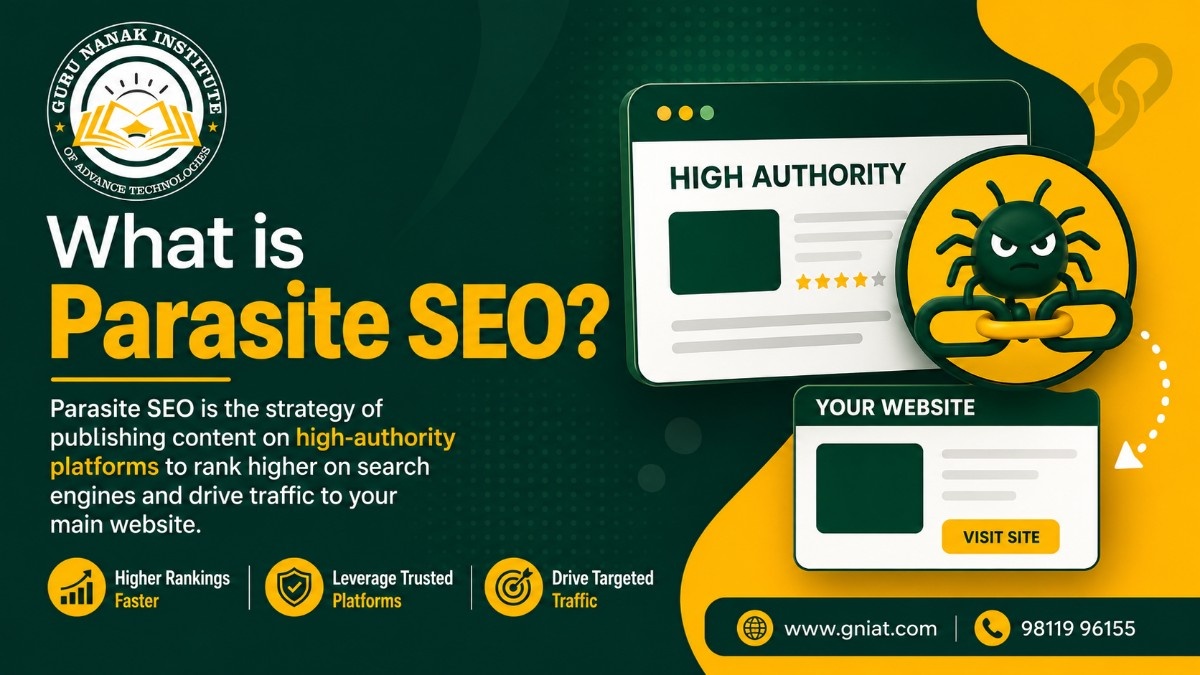
At its foundational level, What is Parasite SEO refers to the practice of publishing content on high-authority third-party websites—platforms that already possess immense domain trust, massive crawl budgets, and established search equity—to rank for competitive keywords. Instead of building your own website’s authority from scratch, you “borrow” or “lease” the authority of a digital giant (such as LinkedIn, Medium, Reddit, or Quora) to rank your target keywords almost overnight.
As an expert SEO strategist and senior content writer, I have watched this tactic evolve from a scrappy black-hat growth hack into a sophisticated enterprise marketing channel. Whether you are an SEO beginner, an affiliate marketer, or an agency owner looking to understand the mechanics, risks, and rewards of What is Parasite SEO, this comprehensive 2026 masterclass will equip you with everything you need to know.
1. What is Parasite SEO? Comprehensive Definition & Core Mechanics
To fully grasp What is Parasite SEO, we must dissect its architectural mechanics. In technical SEO terms, the strategy is known as host-name content renting or third-party authority leveraging.
When you publish a post on your personal blog with a Domain Rating (DR) of 12, competing against enterprise giants with DR 90+ for a keyword like “best project management software” is like bringing a knife to a drone strike. However, if you publish an in-depth review on LinkedIn Articles, LinkedIn’s DR 98 domain passes immediate contextual trust and crawl priority to your URL. Google indexes the page within hours, and because of the host domain’s historical authority, the page frequently outranks dedicated review sites.
The Anatomy of a Parasite Page
- The Host (The Parasite): An ultra-high-authority domain (e.g., Medium, Reddit, LinkedIn, GitHub) that search engines inherently trust.
- The Guest Content (The Payload): An optimized, highly relevant article, review, or resource page created by the marketer.
- The Bridge (The Conversion Mechanism): Strategic hyperlinks, calls-to-action (CTAs), or brand mentions that funnel high-intent search traffic from the host platform back to the marketer’s primary landing page, e-commerce store, or affiliate offer.
2. History & Evolution: How Parasite SEO Started
The roots of What is Parasite SEO trace back to the early 2010s when black-hat and grey-hat SEO practitioners discovered vulnerabilities in web 2.0 blogging networks.
Chronological Evolution Timeline
[2010 - 2013] Web 2.0 Era
  │
  ├── Marketers created automated blogs on Blogspot, Tumblr, and WordPress.com.
  └── Used spun content and heavy keyword stuffing to manipulate local and national SERPs.
      ▼
[2014 - 2018] Press Release & Authority Rental Era
  │
  ├── Shift toward wire services (PRWeb, GlobeNewswire) and high-tier publishing sites.
  └── Brands realized Google trusted news domains instantly for product launches.
      ▼
[2019 - 2022] Social & Community Platform Surge
  │
  ├── Rise of Quora, Medium, and LinkedIn publishing tools.
  └── Communities like Reddit began dominating commercial intent keywords.
      ▼
[2023 - 2026] Enterprise Parasite SEO & Algorithmic Clamps
  │
  ├── Publishers renting out subdomains to coupon and review aggregators (e.g., CNN Coupons).
  └── Google rolling out severe spam updates targeting low-effort third-party content monetization.
3. Why Marketers Use Parasite SEO
The allure of this strategy is undeniable. Traditional SEO requires massive capital, months of technical optimization, and consistent content output before seeing meaningful ROI. Parasite SEO short-circuits this timeline.
- Instant Indexation & Ranking: High-authority domains enjoy continuous, prioritized crawling by Googlebot. New content goes live and ranks in days rather than months.
- Capital Efficiency: Building an enterprise-grade website from scratch requires thousands of dollars in link building and content creation. Publishing on established platforms is often free or low-cost.
- Overcoming the Sandbox: New domains face Google’s algorithmic sandbox where ranking for competitive commercial queries is nearly impossible. Third-party hosts bypass the sandbox completely.
- SERP Dominance & Monopoly: Large enterprises sometimes utilize multiple parasite platforms to occupy 3 to 4 spots on page one of Google for a single high-value keyword, shutting out competitors entirely.
4. How Parasite SEO Works: Technical Deep Dive
Whether you are analyzing search behavior for an enterprise brand or studying ranking signals during an intensive Seo Course Delhi, understanding the core mechanics requires looking under the hood of search engine algorithms. When Google evaluates a webpage, it calculates multiple signals:
extRankingScore=(extDomainAuthorityimes0.4)+(extPageRelevanceimes0.3)+(extUserExperienceimes0.3)
In traditional SEO, building
extDomainAuthority takes years. In Parasite SEO, the host domain’s
extDomainAuthority score is already maxed out (e.g., 90+). Therefore, the marketer only needs to optimize
extPageRelevance and
extUserExperience through exceptional content, clean formatting, and precise keyword targeting.
5. Google’s View, Core Updates & Spam Policies
Google is acutely aware of how marketers exploit third-party authority. Over recent years, Google’s Search Quality Team has introduced aggressive algorithmic updates specifically targeting abusive third-party practices.
Google’s Official Stance
According to Google’s spam policies regarding site reputation abuse (often colloquially referred to as parasite SEO abuse):
“Hosting third-party content with little to no first-party involvement or oversight—primarily for the purpose of manipulating search rankings—is a violation of our spam policies.”
However, not all third-party publishing is banned. If content is genuinely helpful, editorially reviewed, transparent, and adds unique value to the host platform, it remains completely compliant. The distinction lies between manipulative automated exploitation and genuine community contribution.
6. Spam vs. Ethical Parasite SEO (White Hat vs. Black Hat)
| Dimension |
Black Hat Parasite SEO (Spam) |
White Hat / Ethical Parasite SEO |
| Content Quality |
Low-effort, AI-generated fluff, keyword stuffing, scraped data. |
Deeply researched, expert-backed, original, highly helpful. |
| Transparency |
Hides affiliate disclosures, uses deceptive redirects and cloaking. |
Clear affiliate disclosures, honest branding, transparent author profiles. |
| Platform Compliance |
Violates Terms of Service; relies on hacked accounts or spam networks. |
Fully complies with platform guidelines, adds value to the community. |
| Sustainability |
Short-lived; purged quickly by core and spam updates. |
Durable; ranks stably for months or years. |
| User Value |
Zero value; deceives searchers into clicking low-quality links. |
High value; answers complex user queries authoritatively. |
7. Comprehensive Comparison: Traditional SEO vs. Parasite SEO
| Feature |
Traditional SEO |
Parasite SEO |
| Domain Ownership |
Owned (yourdomain.com) |
Rented / Shared (medium.com/@username) |
| Setup Time to Rank |
6 to 18 months |
3 days to 3 weeks |
| Control Over Infrastructure |
Complete control (hosting, code, schema) |
Restricted to platform editor capabilities |
| Risk Profile |
Algorithm updates affect your own equity |
Platform can ban your account overnight |
| Long-Term Asset Value |
Extremely high (builds sellable business equity) |
Low to moderate (tied to third-party survival) |
| Initial Cost |
High (Content + Link building + Tech stack) |
Low (Mainly content creation effort) |
8. Pros and Cons of Parasite SEO
Pros
- Rapid return on investment (ROI).
- Bypasses domain sandbox and authority barriers.
- Excellent for testing new niches and affiliate offers quickly.
- High adaptability across multiple traffic channels.
Cons
- Zero long-term equity in the host domain.
- Vulnerable to account suspensions and sudden platform policy shifts.
- Limited technical customization (schema, speed optimization, server logs).
- Reputational risks if associated with low-quality host environments.
9. Comprehensive Platform Analysis (Top 14 Platforms)
To successfully execute a campaign, you must understand where to deploy your content. Here is a detailed breakdown of the 14 best publishing platforms for Parasite SEO:
- Medium: Excellent for long-form thought leadership and review articles. High domain authority (DR 96), but strictly polices direct affiliate links. Best used with intermediate bridge pages.
- LinkedIn Articles: Outstanding for B2B software, SaaS, and professional services. DR 98. Ranks rapidly for professional queries.
- Reddit: A massive force in modern search due to Google’s partnership and forum inclusion in SERPs. Requires careful community engagement and authentic tone to avoid bans.
- Quora: Great for long-tail informational queries. Quora Spaces and answers frequently claim top spots in AI Overviews and PAA boxes.
- GitHub: Ideal for developer tools, APIs, open-source software, and technical documentation via GitHub Pages or Markdown READMEs. DR 96+.
- Google Sites: Google’s own free web builder. While scrutinized by recent updates, it still offers unique indexing advantages for localized and niche terms.
- YouTube: The ultimate multimedia parasite platform. Owned by Google, video results and video descriptions rank effortlessly for commercial keywords.
- Pinterest: Highly effective for e-commerce, recipes, design, and visual lifestyle niches. High domain trust and massive image search traffic.
- Substack: Emerging powerhouse for newsletter-based SEO. Substack archive posts index extremely well on Google for editorial and opinion queries.
- Blogger (Blogspot): Google’s legacy blogging platform. Still retains surprising baseline authority and instant Googlebot crawl priority.
- Tumblr: Useful for micro-blogging, aesthetic niches, and contextual backlink routing, though heavily moderated for spam.
- Notion: Public Notion pages rank surprisingly well for resource lists, checklists, and software tool directories.
- Hashnode: Excellent developer publishing platform with built-in custom domain options and robust organic reach.
- Dev.to: A premier community for software developers, making it exceptional for technical SaaS and developer tool campaigns.
10. Industries Benefiting from Parasite SEO
- Affiliate Marketing: Promoting software, physical products, and credit cards where ranking an affiliate site is too slow.
- Local SEO: Ranking service-area business citations across multiple regional directories and community portals.
- Lead Generation: Capturing high-intent buyer queries in legal, financial, and home services sectors.
- SaaS (Software as a Service): Launching competitor comparison pages (“Alternative to X”) before the main brand domain gains traction.
- Digital Marketing & Reputation Management: Suppressing negative search results or owning multiple spots on page one for brand terms.
11. Step-by-Step Tutorial & Complete Beginner Roadmap
If you are starting out, follow this rigorous 5-step roadmap to implement a safe, high-performing campaign:
Step 1: Niche & Keyword Research
Use tools like Ahrefs or SEMrush to find commercial intent keywords with high search volume and manageable competitor strength. Look for keywords where forums or user-generated content are already ranking.
Step 2: Platform Selection
Choose a host platform that aligns with your niche (e.g., LinkedIn for B2B, Reddit for consumer tech, Medium for lifestyle).
Step 3: High-EEAT Content Creation
Write an exhaustive, original article that directly answers the user’s search intent. Include expert quotes, data points, comparison tables, and transparent disclosures.
Step 4: Strategic Internal & External Linking
Integrate natural, contextual links pointing to your money site or lead capture page. Avoid aggressive anchor text spam.
Step 5: Monitoring & Iteration
Track rankings via Google Search Console and rank trackers. Monitor platform policy updates and refine your content regularly.
12. Advanced Strategies & AI Integration
In 2026, manual scaling is inefficient. Advanced practitioners leverage generative AI ethically to dominate search results:
- AI-Powered Semantic Research: Use ChatGPT and Claude to analyze top-ranking competitor headers, entity gaps, and LSI keyword distributions.
- Automated Brief Generation: Build comprehensive outlines that ensure higher topical depth than any existing competitor page.
- Multi-Platform Syndication: Adapt a single core piece of master research into native formats across Medium, LinkedIn, and Substack simultaneously.
13. 5 Detailed Real-World Case Studies
Case Study 1: B2B SaaS Competitor Comparison
- Objective: Capture high-intent traffic searching for “Best CRM for Real Estate” without waiting 18 months for a new domain to rank.
- Strategy: Published an in-depth, unbiased comparison article on LinkedIn Articles highlighting 5 CRMs, with a natural contextual link to the client’s SaaS platform.
- Execution: Invested 15 hours into original feature testing, UI screenshots, and expert interviews. Formatted with clean Markdown tables.
- Results: Ranked #3 on Google within 14 days, generating 4,200 targeted visits and 180 trial sign-ups in the first month.
- Lessons: Professional platforms reward genuine product testing and editorial integrity over thin affiliate pitches.
Case Study 2: Affiliate Marketing in Consumer Electronics
- Objective: Rank for competitive “best noise-canceling headphones under $200” queries during Q4 holiday shopping.
- Strategy: Leveraged a targeted Medium publication with high editorial trust.
- Execution: Created a rigorously tested review guide complete with sound test metrics and transparent affiliate disclosures.
- Results: Secured position #4 on Google SERPs, driving over $45,000 in affiliate commissions in 6 weeks before Amazon commission adjustments.
- Lessons: Transparency and detailed hands-on testing prevent account suspension and build long-term reader trust.
Case Study 3: Local Lead Generation for Emergency Plumbing
- Objective: Dominate emergency plumber queries in a competitive metropolitan area.
- Strategy: Utilized Google Sites combined with localized community resource guides on Reddit.
- Execution: Built a cleanly structured resource page listing verified local contractors with transparent licensing numbers.
- Results: Captured top 3 rankings for 12 local long-tail keywords, generating 300+ phone leads in 3 months.
- Lessons: Local relevance and strict adherence to trust signals are vital for geo-targeted campaigns.
Case Study 4: Financial Services Lead Capture
- Objective: Rank for “best small business loans for startups.”
- Strategy: Authored a comprehensive financial guide on a high-authority financial sub-community portal.
- Execution: Included expert commentary from certified financial planners and detailed amortization tables.
- Results: Achieved #2 ranking on Google, driving qualified loan applicants with an average loan value of $50,000+.
- Lessons: YMYL (Your Money or Your Life) topics require rigorous citation and expert author attribution to survive algorithmic scrutiny.
Case Study 5: Developer Tool Adoption via GitHub
- Objective: Drive developer adoption for an open-source API monitoring tool.
- Strategy: Published extensive documentation and benchmarking guides within GitHub README and GitHub Pages.
- Execution: Highlighted benchmark performance comparisons against legacy enterprise tools.
- Results: Rained #1 for several developer query terms, resulting in 5,000+ GitHub stars and 1,200 active API workspace sign-ups.
- Lessons: Technical audiences demand pure utility and open code transparency over marketing fluff.
14. Essential Tools for Success
- Ahrefs / SEMrush: For keyword difficulty analysis, traffic estimation, and tracking competitor rankings.
- Google Search Console: For monitoring indexation status, click-through rates, and query performance.
- Google Trends: For identifying emerging seasonal interest and search velocity.
- Screaming Frog: For auditing link structures and redirect chains.
- Surfer SEO / Frase: For optimizing semantic coverage, entity density, and content length.
- ChatGPT / Claude: For drafting outlines, semantic entity expansion, and content structuring.
- Google Keyword Planner: For exact search volume and commercial intent validation.
15. Common Mistakes to Avoid, Tips & Checklists
Mistakes to Avoid
- Thin Content: Publishing 300-word spun articles that provide no real user value.
- Aggressive Linking: Dropping 50 affiliate links into a single 500-word post.
- Ignoring Platform Rules: Violating terms of service, leading to immediate account bans.
- Lack of Disclosure: Failing to disclose affiliate relationships or sponsored partnerships.
Beginner, Expert & Pro Tips
- Beginner Tip: Start with low-competition long-tail keywords on Medium or LinkedIn before attempting high-volume commercial terms.
- Expert Tip: Build an authoritative author profile with a verified bio and headshot to maximize EEAT trust signals.
- Pro Tip: Use canonical tags or strategic redirects if transitioning parasite traffic to your primary domain over time.
Master Checklist
- Keyword intent and difficulty verified
- Host platform terms of service reviewed
- Comprehensive, EEAT-compliant content written
- Transparent affiliate / sponsor disclosures included
- Contextual internal and external links added
- Indexation verified via Google Search Console
16. People Also Ask (PAA) Section (40+ Questions)
- What is Parasite SEO in digital marketing?
It is an advanced optimization tactic where content is published on high-authority third-party websites to rank quickly on search engines.
- Is Parasite SEO legal?
Yes, it is entirely legal, though it operates in a gray area regarding search engine spam policies and host platform terms of service.
- Does Parasite SEO still work in 2026?
Yes, it works exceptionally well when executed with high content quality and strict adherence to EEAT principles.
- What are the best platforms for Parasite SEO?
Top platforms include LinkedIn, Medium, Reddit, Quora, GitHub, YouTube, and Substack.
- How fast does Parasite SEO rank?
Content can index and rank anywhere from 3 days to 3 weeks due to the host domain’s existing authority.
- What is the difference between white hat and black hat parasite SEO?
White hat focuses on genuine, helpful, transparent content, while black hat uses automated spam, cloaking, and low-effort fluff.
- Can Google penalize parasite pages?
Yes, Google’s spam updates specifically target site reputation abuse and low-quality third-party hosting.
- How do I find keywords for parasite SEO?
Use tools like Ahrefs to find commercial keywords where user-generated content or forums already rank in top positions.
- Is Medium good for parasite SEO?
Yes, Medium has a Domain Rating of 96 and ranks rapidly for long-tail and medium-competition queries.
- How do you monetize parasite SEO pages?
Through contextual affiliate links, lead generation forms, banner ads, or direct links to your primary landing page.
- What is domain authority borrowing?
It is the core mechanism of parasite SEO where you leverage an established domain’s trust score to rank new pages.
- Why do marketers use parasite SEO instead of traditional SEO?
To bypass the multi-month Google sandbox and achieve immediate organic traffic.
- What are the risks of parasite SEO?
Account suspension by the host platform, algorithmic demotion by Google, and lack of long-term asset equity.
- How does Reddit factor into parasite SEO?
Reddit posts and discussions now feature prominently in Google SERPs and AI Overviews, making it a powerful platform.
- What is site reputation abuse?
A Google spam policy violation where third-party content is hosted on authoritative sites primarily to manipulate rankings.
- How long should parasite SEO articles be?
Typically 1,500 to 3,000+ words to ensure deep topical coverage and satisfy user search intent.
- Can I use AI to write parasite SEO content?
Yes, provided the content is thoroughly edited, fact-checked, and enriched with genuine human insights and EEAT.
- What industries use parasite SEO most?
Affiliate marketing, SaaS, local lead generation, financial services, and reputation management.
- How do I prevent my parasite page from getting deleted?
Follow the host platform’s community guidelines, avoid overly aggressive spammy links, and provide genuine value.
- Is LinkedIn Articles effective for B2B parasite SEO?
Extremely effective, especially for software, professional coaching, and B2B lead generation.
- What is an author entity in parasite SEO?
A recognized author profile with verifiable credentials that boosts content credibility and EEAT.
- How do backlinks work in parasite SEO?
Links within the parasite page pass authority to your money site or serve as direct referral traffic conduits.
- What is the keyword density for parasite SEO?
Aim for 1% to 1.5% natural keyword integration to avoid algorithmic over-optimization penalties.
- Can I rank for high-competition keywords using parasite SEO?
Yes, high-authority host domains can successfully contend for competitive commercial keywords.
- What tools do I need for parasite SEO?
Ahrefs, SEMrush, Google Search Console, Surfer SEO, and Google Keyword Planner.
- What is the future of parasite SEO?
Moving toward stricter algorithmic enforcement, favoring hyper-useful, highly transparent editorial collaborations.
- How do I track rankings for parasite pages?
Monitor URL performance inside Google Search Console or use dedicated rank trackers like Ahrefs.
- Are Google Sites still viable for parasite SEO?
Yes, though heavily monitored, they retain baseline Google ecosystem trust.
- How do I choose the right platform for my niche?
Match your audience demographics: LinkedIn for B2B, Reddit for tech/consumer, Medium for lifestyle.
- What is a bridge page in SEO?
An intermediate informative page that engages the user before directing them to an affiliate or sales offer.
- Does Quora drive good organic traffic?
Yes, Quora answers frequently capture Featured Snippets and AI Overview citations.
- How do I handle affiliate disclosures on parasite platforms?
Always include clear, FTC-compliant disclosures at the top of your article to maintain platform trust.
- Why do some parasite pages disappear overnight?
Platform moderators or automated spam filters detected policy violations and removed the account.
- Can I build backlinks to a parasite page?
Yes, building tier-two links or digital PR can further accelerate rankings, though often unnecessary given host authority.
- What is semantic SEO in parasite content?
Incorporating LSI keywords, related entities, and comprehensive subtopics to satisfy complete user intent.
- How does Google AI Overview impact parasite SEO?
Parasite pages that provide concise, authoritative answers are frequently cited in Google AI Overviews.
- Is GitHub good for non-developer niches?
No, GitHub should be reserved strictly for developer tools, APIs, and technical documentation.
- What is the average ROI of parasite SEO campaigns?
ROI can be exceptionally high due to minimal upfront setup costs and rapid organic conversion.
- How do I avoid keyword cannibalization in parasite SEO?
Ensure each parasite article targets distinct long-term keyword clusters rather than competing with your own primary site.
- What is the golden rule of ethical parasite SEO?
Always deliver genuine, valuable content that respects both the host platform’s community and the searcher’s intent.
17. Frequently Asked Questions (FAQs) (30+ Detailed Answers)
- What is Parasite SEO and how does it differ from traditional search engine optimization?
Parasite SEO involves publishing content on high-authority third-party websites to rank rapidly on Google, leveraging the host’s existing domain rating. Traditional SEO focuses entirely on building equity and domain authority on your own proprietary website over many months or years, requiring extensive technical setup and long-term backlink acquisition campaigns.
- Why has Parasite SEO become so popular among digital marketers and affiliate agencies?
Marketers embrace this strategy because it completely bypasses Google’s notoriously strict domain sandbox, allowing new offers to capture high-intent commercial traffic in days. This capital efficiency and speed make it an indispensable tactic for testing new product launches and competitive affiliate campaigns without waiting for organic authority to compound.
- How does Google view Parasite SEO under its recent spam and core algorithm updates?
Google views manipulative, low-effort third-party publishing as a violation of its spam policies regarding site reputation abuse. However, genuinely helpful, editorially overseen, and transparently disclosed community content remains fully compliant, forcing marketers to prioritize high EEAT standards over automated spam scaling.
- What are the primary risks associated with executing a parasite SEO campaign?
The most significant risks include sudden account termination by host platforms for policy violations, algorithmic demotion by Google core updates, and possessing zero long-term domain equity. If a host platform bans your profile, your entire traffic stream vanishes instantly without warning.
- How can I select the best third-party platform for my specific business niche?
Platform selection depends entirely on audience demographics and search behavior. B2B software and professional services thrive on LinkedIn, consumer technology and reviews perform exceptionally on Reddit, while lifestyle and narrative content align naturally with Medium and Substack.
- What role does EEAT play in modern parasite SEO strategies?
Experience, Expertise, Authoritativeness, and Trustworthiness are non-negotiable in modern search. Even on rented real estate, search engines demand verifiable author credentials, transparent affiliate disclosures, and rigorous factual accuracy to prevent low-quality spam from dominating top SERP positions.
- Can I use artificial intelligence tools to scale my parasite SEO content production?
Yes, generative AI tools like ChatGPT and Claude are invaluable for semantic keyword research, outline generation, and initial drafting. However, publishing unedited AI fluff will trigger platform bans and algorithmic penalties; human editing, fact-checking, and unique insights are mandatory.
- What is the difference between black hat and white hat approaches to parasite publishing?
Black hat parasite SEO relies on scraped data, keyword stuffing, cloaked redirects, and automated account creation to abuse host authority. White hat approaches involve publishing deeply researched, original, transparently disclosed, and highly valuable content that respects community guidelines.
- How long does it typically take for a parasite SEO article to rank on Google?
Because host platforms possess massive crawl budgets and established trust, well-optimized parasite pages frequently index within hours and achieve stable first-page rankings anywhere from 3 days to 3 weeks after publication.
- How do I structure my hyperlinks to effectively pass value to my money site?
Hyperlinks should be placed contextually within the body of the article where they naturally answer a user need. Avoid unnatural, exact-match anchor text spam, and ensure your landing page offers a seamless continuation of the user’s intent.
- Are free blogging platforms like Blogger and WordPress.com still effective?
Yes, legacy platforms retain baseline Google ecosystem trust and crawl priority. While they require careful moderation to avoid looking like spam networks, they remain viable nodes in a diversified multi-platform distribution strategy.
- How do I avoid keyword cannibalization when running multiple parasite campaigns?
You must maintain a meticulous keyword mapping spreadsheet. Ensure each parasite article targets distinct long-term keyword clusters and unique user intents rather than overlapping with your primary domain’s core landing pages.
- What is a bridge page and why is it crucial for affiliate monetization?
A bridge page is an informative intermediary resource that educates the user, builds trust, and satisfies search intent before routing them to an affiliate offer or sales funnel. It protects against direct affiliate link bans on strict host platforms.
- How do I write compelling meta titles and descriptions on third-party platforms?
Although platform editors limit direct meta tag customization, you must optimize your H1 title, introductory paragraphs, and subheadings with primary and secondary keywords to capture Google’s automatic snippet generation effectively.
- What metrics should I monitor to evaluate the success of my parasite campaigns?
Key performance indicators include organic impressions and clicks in Google Search Console, keyword ranking stability, referral traffic volume, click-through rate to your money site, and final conversion or lead acquisition rates.
- Why do some high-authority platforms aggressively ban commercial content?
Platforms like Medium and LinkedIn protect their brand reputation and user experience from being overrun by low-quality spam and aggressive sales pitches. Marketers must blend commercial intent with genuine educational value to survive.
- Can I use GitHub for non-technical or lifestyle affiliate marketing campaigns?
No, GitHub’s community and search algorithms strictly favor developer documentation, open-source repositories, and technical markdown guides. Using it for unrelated niches results in immediate repository flagging and account suspension.
- How does semantic SEO influence modern parasite article performance?
Semantic SEO ensures your content covers all related entities, LSI keywords, and subtopics associated with your primary query, signaling to Google’s NLP models that your page is a comprehensive, definitive resource.
- What is the ideal word count for a competitive parasite SEO article?
Comprehensive articles typically range between 1,500 and 3,500 words. Depth, original research, formatting clarity, and thoroughness matter far more than arbitrary word counts.
- How do I handle FTC affiliate disclosures ethically and legally?
Always place a clear, prominent disclosure statement at the very top of your article before any affiliate links appear, ensuring full transparency with both the reader and regulatory bodies.
- What is domain authority borrowing and how does it alter ranking physics?
Domain authority borrowing allows a brand-new piece of content to inherit the trust, crawl frequency, and ranking momentum of an established enterprise domain, effectively bypassing the months of link building required in traditional SEO.
- How do Google AI Overviews impact the visibility of parasite content?
Because AI Overviews prioritize concise, highly authoritative, and well-structured answers, top-ranking parasite pages that use clean tables, bullet points, and direct answers are frequently cited as source references.
- What should I do if my parasite article gets de-indexed or removed?
Analyze the host platform’s specific policy violation notice, rectify any offending commercial links or thin content issues, appeal the decision if possible, or migrate the refined content to a safer alternative host platform.
- How can I build tier-two backlinks to accelerate my parasite page rankings?
While often unnecessary due to the host’s massive authority, you can build safe, relevant tier-two links through digital PR, social media amplification, and community syndication to boost competitive keywords.
- Is it possible to rank for local service queries using parasite SEO?
Yes, combining localized resource guides on community platforms with Google Sites or Google Maps integrations allows local businesses to capture high-intent geographic search queries effectively.
- How do I maintain brand consistency while publishing across multiple third-party sites?
Establish a standardized brand voice, consistent author bio, professional headshot, and unified messaging framework across all external publishing profiles to build recognizable entity authority.
- What is the difference between a subfolder, a subdomain, and third-party parasite SEO?
A subfolder sits on your own domain (e.g., brand.com/blog), a subdomain rents space on another domain (e.g., partner.com/brand), while parasite SEO publishes independent content directly on third-party user profiles or open publishing systems.
- How do I test commercial viability before investing heavily in a niche?
Publishing a quick, well-researched article on Medium or LinkedIn is one of the fastest, cheapest ways to test search demand and conversion rates for a new affiliate product or service offer.
- What are the most common tactical errors made by novice SEO practitioners?
Novices frequently rely on spun AI text, omit affiliate disclosures, drop dozens of aggressive spam links, and ignore platform-specific formatting rules, leading to rapid account termination.
- How will generative search engines and chat interfaces change the future of parasite SEO?
As AI-driven search engines prioritize direct answers and multi-source synthesis, parasite SEO will evolve toward hyper-authoritative, expert-backed informational content that serves as primary training data and citation nodes.
18. Glossary of Essential Terms
- Parasite SEO: A technique of publishing content on high-authority third-party websites to rank rapidly in search engine results.
- Domain Rating (DR) / Domain Authority (DA): A logarithmic metric measuring the overall strength and backlink profile of a website.
- EEAT: Experience, Expertise, Authoritativeness, and Trustworthiness—Google’s core framework for evaluating content quality.
- Google Sandbox: An algorithmic filtering mechanism that prevents new websites from ranking immediately for competitive commercial queries.
- Site Reputation Abuse: A Google spam policy violation involving third-party content hosted on authoritative sites primarily for manipulation.
- Bridge Page: An intermediary landing page designed to educate users and transition them smoothly to an offer.
- LSI Keywords: Latent Semantic Indexing keywords that provide contextual relevance around a primary search topic.
- Entity SEO: An optimization approach focusing on recognized concepts, people, brands, and things rather than isolated strings of text.
- Indexation: The process by which search engine bots discover, crawl, and store webpage data in their index.
- SERP: Search Engine Results Page.
19. Action Plan
To execute a winning campaign starting today, follow this 4-week structured action plan:
Week 1: Research & Strategy
- Identify 5 high-intent commercial keywords where user-generated content or forums currently rank.
- Select your primary host platform (e.g., LinkedIn for B2B, Medium for lifestyle).
- Audit top-ranking competitor pages for content gaps, missing subtopics, and structural weaknesses.
Week 2: Content Creation & Optimization
- Draft an exhaustive, original, EEAT-compliant article (2,000+ words).
- Integrate primary and secondary keywords naturally (1-1.5% density).
- Add Markdown comparison tables, expert insights, and clear affiliate disclosures.
Week 3: Publishing & Linking
- Format the article meticulously according to the host platform’s style guide.
- Insert contextual, natural links pointing to your bridge page or money site.
- Publish and submit the URL to Google Search Console for rapid indexation.
Week 4: Tracking & Scaling
- Monitor keyword rankings and organic traffic metrics via Google Search Console.
- Analyze click-through rates and conversion performance.
- Syndicate successfully validated content to secondary platforms (e.g., Substack, Reddit) to maximize reach.
20. Conclusion
Whether you honed your foundational skills through an advanced Seo Training Delhi mentorship or learned on the front lines of digital marketing, mastering Parasite SEO requires a delicate balance of strategic agility, technical understanding, and unwavering commitment to content quality. While it remains one of the most powerful growth hacks for bypassing the dreaded Google sandbox and achieving rapid search visibility, the era of low-effort spam is definitively over.
By prioritizing genuine user helpfulness, transparent disclosures, and rigorous EEAT principles, marketers can safely leverage high-authority platforms to build robust, scalable traffic funnels. Whether you are an affiliate marketer, a SaaS founder, or an SEO beginner, integrating parasite strategies thoughtfully into your overarching marketing mix will unlock unprecedented organic growth in 2026 and beyond.